Woodside Real Estate Guide: Luxury Estates and Equestrian
Schedule a consultation for Woodside real estate. Explore luxury estates, equestrian properties, and large-acre homes in Silicon Valley's premier enclave.
July 16, 2026 · 14 min read · Property guides
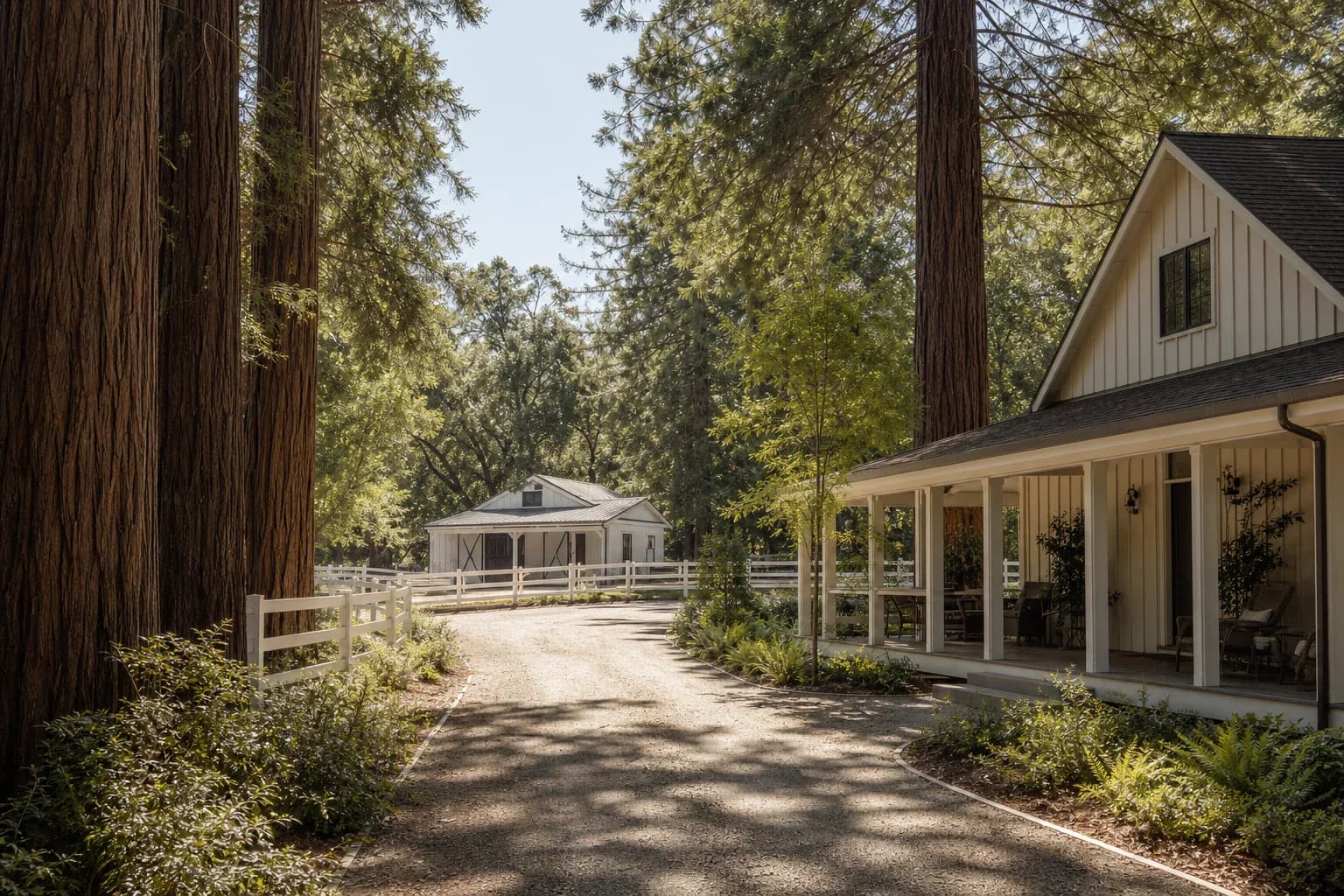
Woodside Real Estate: Luxury Estates and Equestrian Homes
Woodside real estate offers luxury buyers unmatched privacy, large-acre parcels, and prestigious equestrian estates minutes from Silicon Valley tech campuses. Properties feature generous acreage, private stables where permitted, trail access, and custom architecture in a protected natural landscape.
Are you ready to find your dream estate in the Peninsula’s most exclusive enclave? Call 650-400-1011 or request a private consultation about available Woodside properties today.
Selecting an estate in Woodside requires deep market insight and absolute discretion. As you consider your options on the Peninsula, it is essential to understand how this community compares to neighboring towns. The analysis below explains why this rural enclave remains the ultimate destination for discerning buyers.
Why Homebuyers Choose Woodside Over Closer-In Suburbs
High-net-worth buyers in California face a choice between prestige neighborhoods near tech hubs. Many choose Woodside over Palo Alto or Menlo Park because of the luxury of space. Woodside features large-acre properties and equestrian estates that offer significant privacy for luxury buyers. While closer-in towns have compact residential lots, this town provides a quiet retreat in nature.
The Luxury of Space and Acreage
In Palo Alto or Menlo Park, even premium homes often sit on lots of a quarter acre or less. In contrast, much of Woodside’s residential zoning is built around large-lot living. Standard single-family residential (SR) zones utilize a one-acre baseline lot size, and numerous neighborhoods feature multi-acre estates. In certain environmentally sensitive districts, such as Residential/Environmental Sensitive Areas (R-ESA) and Special Conservation Planning (SCP) zones, the Town enforces larger minimums, including 5-acre parcels, to preserve low density.
This range of one-acre and larger parcels gives buyers room for custom builds, private pools, guest houses, gardens, and, where zoning allows, equestrian facilities. The result attracts venture capitalists and tech founders who value discretion. Spacious setbacks keep homes well back from the street. Gated entries and long driveways limit public views. For those who want peace after long days at the office, the landscape acts as a natural shield. Browse current Woodside homes for sale to see available properties.
Quick Answer: Woodside attracts wealthy buyers from Palo Alto and Menlo Park because it offers one-acre-and-up baseline lots, select 5-acre-minimum districts in sensitive environmental hillside zones, dense forest buffers, and estate-sized parcels that provide seclusion without sacrificing a short Silicon Valley commute.
A Fast Commute to Silicon Valley Tech Hubs
Living in a rural setting usually means a very long drive, but Woodside offers a rare balance. The town sits near Interstate 280, linking residents quickly to Apple, Google, and Meta offices. Tech executives can enjoy quiet country living without spending hours on the road each day. This proximity is a major competitive advantage for Woodside real estate.
How Woodside Compares to Nearby Suburbs
Palo Alto offers urban convenience and top schools. Menlo Park has leafy streets and quiet lanes. But both are denser suburbs with close neighbors and busier streets. Woodside offers a slower pace focused on nature. The town center has a simple grocery store and local restaurants, preserving a quiet country feel. Prices for these private properties range from roughly $5.5 million to well above $60 million, reflecting the extreme value placed on space and privacy.
Read our complete guide to buying a home in Woodside for more details on neighborhood comparisons.
Equestrian Estates: Land, Stables, and Riding Culture
Equestrian estates are a signature part of the Woodside landscape and culture. Larger parcels allow residents, where permitted, to build private stables, barns, and riding rings, subject to the Town’s private-stable regulations. This lifestyle draws buyers who want space for their horses and a close connection to nature.
Quick Answer: Equestrian properties in Woodside generally require at least a one-acre parcel, which serves as the minimum lot size for keeping horses under Town private-stable guidelines. Standard regulations limit keeping to two horses per acre, though many premium horse properties feature multi-acre layouts with custom stables, arenas, paddocks, and direct access to regional trail networks, making Woodside one of California’s premier equestrian communities.
Zoning and Land Requirements
To keep its rural feel, the town maintains strict zoning rules. In standard residential areas, the baseline minimum lot size for a typical single-family parcel is about one acre, and this standard also underpins the regulations for keeping horses. In more environmentally sensitive hillside or conservation districts—often mapped as Residential/Environmentally Sensitive Areas (R-ESA) or Special Conservation Planning (SCP) zones—minimum lot sizes increase, and some of these specific zones require 5-acre minimum parcels to maintain low density.
For equestrian use, Woodside’s private-stable standards generally require:
- A minimum parcel size of approximately one acre to keep horses
- A limit on the number of horses per acre, which is generally capped at two horses per acre
- Adequate turnout area, shelter, and slope conditions, as well as fire-safety and waste-management measures
Woodside real estate listings on larger parcels often include turnouts, pastures, and custom barns, but every property is still subject to detailed Town review and permitting.
The Planning and Review Process
Building or modifying a horse property requires careful planning. The local government manages environmental and design review through its Planning Department. According to the Town of Woodside Planning Department, officials analyze building projects for conformance with town regulations. Prior to submitting an application, applicants should meet with a planner to discuss zoning, site development standards, and private-stable requirements. This early meeting helps protect the local watershed and natural habitat and ensures your project matches the Town’s equestrian and rural-character goals.
Trails and Community Culture
The area features an extensive network of riding trails connecting private properties to public parks. Riders can access scenic paths in the Skyline and Kings Mountain areas (where zoning is often more restrictive and can include larger minimum lot sizes) as well as lower-slope trail connections closer to town. This trail system supports a vibrant community of horse owners who share a passion for the equestrian lifestyle. Local clubs and events make it easy for residents to connect.
Acreage Comparison for Buyers
Buyers looking for horse properties can choose from different parcel sizes depending on their needs and Woodside zoning. The table below offers illustrative examples of what you might see at different acreage levels; actual permissions always depend on parcel-specific zoning and Town approvals.
| Acreage Level | Potential Horse Facilities (subject to Town rules) | Common Estate Features |
|---|---|---|
| 1 to 3 Acres | Small paddocks, turnouts, keeping up to 2 horses per acre; compact barn or shelters; carefully planned drainage and fire-safety measures | Main home, small barn or shelter, mature landscaping, possible trail access depending on location |
| 3 to 5 Acres | Barn with multiple stalls, dedicated turnout areas, and a modest arena where zoning and slope allow; more flexibility for stable layout and support structures | Main home, guest cottage or ADU, storage buildings, enhanced privacy with deeper setbacks and perimeter fencing |
| 5+ Acres | Larger equestrian operations where permitted, including more extensive stabling, full-size arenas, and multiple pastures, especially in districts zoned with 5-acre minimums or special conservation designations | Main home, guest houses, pool, extensive grounds, potential direct access to regional trail networks in certain hillside areas |
Woodside Real Estate Market: Prices, Property Types, and Trends
Quick Answer: Woodside’s market features limited inventory of luxury homes. Entry-level properties often start around the mid-single-digit millions, while premier estates can reach well into eight-figure prices. Low-density zoning and strict environmental review keep supply constrained and values high.
Buying a home in Woodside requires a clear view of local trends and property values. The market moves at a unique pace driven by high-end inventory and low density.
- Understand current market inventory: The supply of luxury estates is always limited. At any given time, only a few dozen homes may be available across major brokerage platforms. This small inventory means buyers have less choice but more room for careful, property-by-property evaluation. The Town of Woodside manages environmental and design review through its Planning Department to protect natural spaces and maintain low-density zoning.
- Identify distinct property types: Most listings feature large parcels, horse-friendly properties, and private estates. Lot sizes frequently span one acre to several acres, with select offerings in 5-acre-minimum conservation districts. Many properties cater to the equestrian lifestyle with private barns, stables, and trail access. The Woodside community page offers more context on the town itself.
- Evaluate the price spectrum: Current entry-level single-family homes typically start around $5.5 million. Major estates can reach $60–70 million or more. This premium reflects strong demand from Silicon Valley executives and global buyers who want privacy. Long-range policy plans such as the Housing Element track local trends and outline housing growth objectives, while Town zoning standards work to preserve the rural, low-density feel even as land values rise.
- Work with a local market specialist: Navigating this complex market requires an expert guide. A local specialist helps compare values across neighborhoods and explains how Peninsula zoning rules affect your plans for building, remodeling, or equestrian use. Check the current monthly Peninsula market report for the data you need to make smart offers.
Privacy, Nature, and the Silicon Valley Commute
Quick Answer: Woodside offers deep privacy within a 15- to 25-minute drive of major tech campuses. One-acre-and-up zoning, deep setback rules, thick tree canopies, and, in some areas, 5-acre minimum parcels create a mountain-sanctuary feel while keeping commutes to Menlo Park and Palo Alto fast and direct.
The Woodside real estate market stands out because it offers an unusual balance of seclusion and access to world-class tech hubs. While nearby cities feature dense housing, Woodside relies on large-lot zoning and careful planning to keep properties spacious. Many neighborhoods require at least one-acre lots, and certain environmentally sensitive hillside districts enforce a 5-acre minimum, which helps preserve the thick canopy of coast redwood and oak trees. Deep setback rules and generous landscaping ensure homes sit far back from public roads. The result is a quiet environment where high-profile residents can escape public view, all within a few miles of key metropolitan centers.
Preserving Natural Character and Quiet Spaces
Local government plays a key role in keeping this peaceful atmosphere alive. The Town of Woodside manages environmental and design review through its Planning Department as part of the project development process, ensuring that new builds respect the natural topography and mature trees. According to the Woodside Planning Department, any development must be designed to fit the land rather than reshape it dramatically. These rules keep neighborhoods green and quiet while helping secure long-term value for property owners. This careful planning preserves the oak canopies and redwood forests that make the area feel like a mountain sanctuary rather than a suburb.
Fast Commutes to Silicon Valley Tech Hubs
For tech executives, this natural sanctuary is highly practical. Woodside provides proximity to major tech campuses with a quick commute to global firm offices. Residents can drive to Meta headquarters in Menlo Park or major campuses in Palo Alto and Mountain View in about 15 to 25 minutes, traffic permitting. Interstate 280 serves as the main spine of Peninsula travel and bypasses much of the congestion on lower-Valley roads.
Why Privacy Matters for High-Profile Buyers
Discretion is a core asset in Woodside. Many luxury buyers choose this community because large parcels provide a buffer from neighbors and the public. One-acre-plus properties and equestrian estates offer significant privacy for luxury buyers who need to secure their personal space. The Town monitors demographics and housing trends through long-range planning documents to maintain its rural, low-density feel. Estate lots allow private security gates, perimeter fencing, and substantial landscape screening while keeping commute times short.
Our comparison of Woodside and Portola Valley real estate shows how two neighboring towns approach privacy and land use differently.
How To Buy a Luxury Estate in Woodside
Quick Answer: Buying in Woodside requires defining land goals, understanding Town development rules (including lot size and equestrian standards), securing specialized financing, working with a local specialist, performing detailed due diligence, and making a strategic offer.
Buying a high-end estate in the Peninsula region requires a clear and structured plan. The local market for Woodside real estate is competitive and complex. High-net-worth buyers, tech founders, and venture capitalists choose this quiet town for its privacy and large parcels. Working with an expert advisor helps you secure the right property with confidence.
Define Your Land and Property Goals
First, outline what you need from your estate. Homes in Woodside often sit on one or more acres, with some estates spanning five acres or more in special conservation districts. You must decide if you want equestrian stables, guest homes, or private riding trails. Knowing your space needs first makes your search much easier.
Understand Town Development Rules
Next, research Town rules before you buy. Local government has strict guidelines to protect the natural land, including minimum lot sizes, slope standards, and detailed private-stable regulations for horse properties. You can learn more on the Town of Woodside Planning Department website. Checking these rules early prevents costly issues later.
Secure Specialized Financing
Then, set up your funding. Luxury purchases often require custom financial paths. Tools like bridge loans or concierge services can help make your offer strong and allow you to compete with cash buyers.
Work with a Local Specialist
A local expert is essential. An experienced Realtor who understands Woodside’s zoning and equestrian standards can guide you through nuances like non-conforming parcels, private-stable permits, and conservation overlays. Robert Parish brings decades of local market experience and is also a licensed California attorney who can help protect your interests during tough negotiations.
Perform Detailed Due Diligence
Before making an offer, inspect the property thoroughly. Review land boundaries, soils, water sources, septic and fire-zone issues, and any existing or potential equestrian facilities. If you plan to build or expand stables, confirm that the parcel meets minimum lot size and private-stable requirements and that you can obtain necessary permits.
Make a Strategic Offer and Close
Your advisor will help you write a strong offer tailored to Woodside norms. A clean contract with clear terms appeals to sellers. Once the seller accepts, your team guides you through escrow to a smooth close. The goal is to help you create and preserve equity with every transaction.
If you plan to sell a property in the area, prepare ahead of time. Read these tips on selling a Woodside home to maximize your value.
Frequently Asked Questions
What is the minimum lot size for Woodside real estate?
Minimum lot size in Woodside depends on zoning. Many standard single-family residential areas use a baseline minimum of approximately one acre. In certain environmentally sensitive or hillside conservation zones, the Town applies larger minimums, including 5-acre parcels, to maintain very low density and protect natural resources. Always confirm the exact zoning and minimum lot size for a specific parcel with the Town or a qualified advisor.
Is Woodside real estate suitable for keeping horses?
Yes. Woodside is one of the premier equestrian communities in California. The Town’s private-stable regulations generally require at least a one-acre parcel and limit the number of horses per acre, with additional standards for shelter, turnout area, slope, fire protection, and manure management. Many properties offer several acres of land, private stables, and access to local riding trails. These horse estates are a major draw for luxury home buyers in the region.
How long is the commute from Woodside to Silicon Valley tech campuses?
Woodside offers a very short commute to major tech hubs. Depending on traffic and exact location, you can often reach key campuses in Menlo Park, Palo Alto, and Mountain View in about 15 to 25 minutes. This close proximity allows tech executives to live in a quiet, private sanctuary while remaining close to their offices.
Do you need town approval to build on Woodside real estate?
Yes. You must get Town approval before starting any building project. The Town of Woodside Planning Department reviews all projects to ensure they comply with zoning, development standards, and environmental requirements. Meeting with a planner early helps you understand local rules for grading, trees, equestrian facilities, and design so you can move forward with confidence.