Buying Land to Build in Atherton: A Due Diligence Guide
A practical framework for evaluating an Atherton property before relying on its development potential, from goals and site constraints to team coordination.
September 4, 2026 · 4 min read · Buying · Property guides
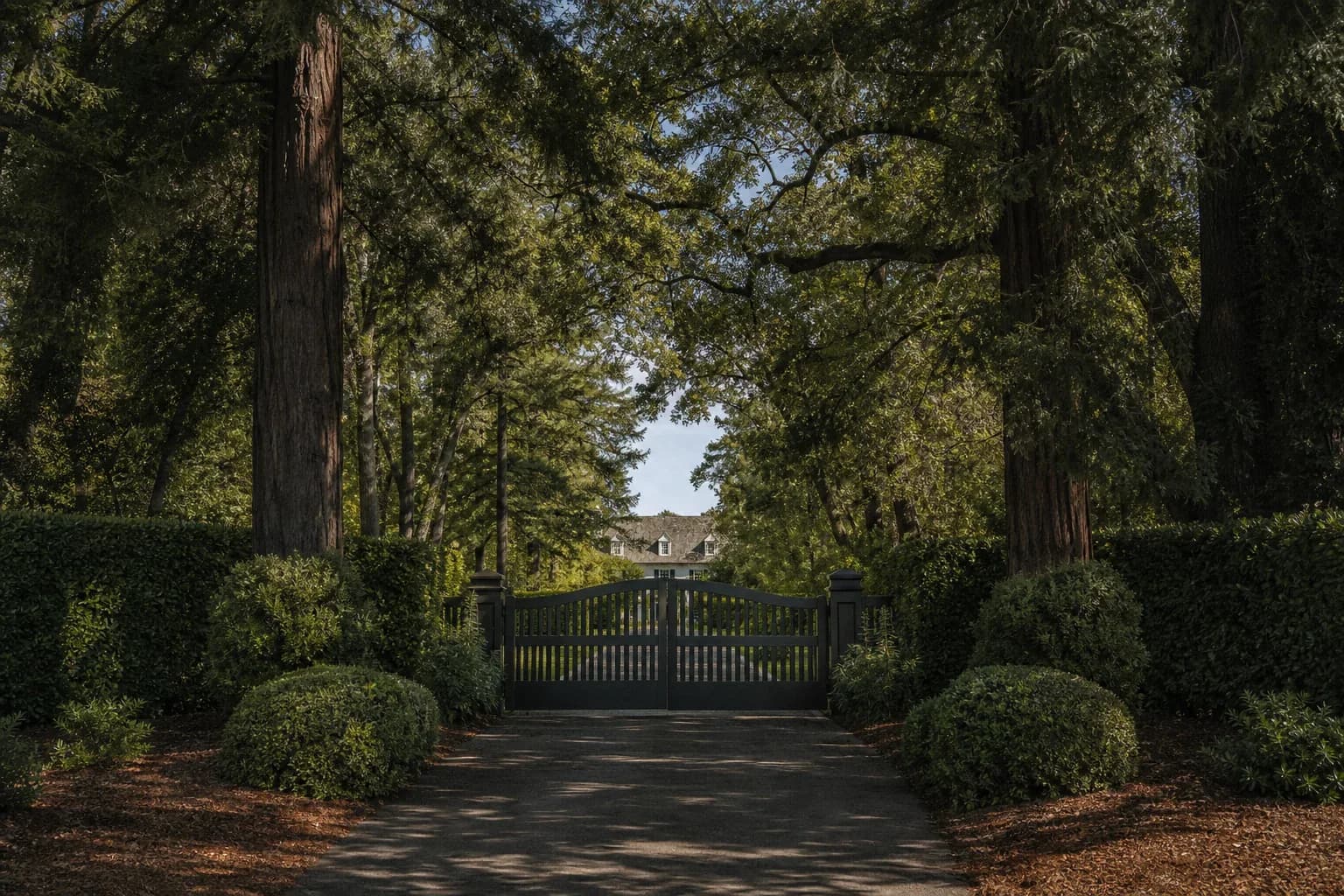
An Atherton property can look ideal for a custom home while still carrying important limits. Trees, access, drainage, existing improvements, utilities, setbacks, and the approval process can all shape what is practical.
That is why buying land to build in Atherton should begin with questions, not a rendering. The goal is to understand the site before you assign value to a future home.
Start with the outcome you want
Define the life the completed property must support. Consider the main residence, guest space, office needs, outdoor areas, privacy, vehicle storage, and long-term flexibility.
Separate requirements from preferences. A clear brief helps the architect, builder, and other specialists test the same idea. It also prevents an attractive property from controlling the plan before the site has been reviewed.
Treat the parcel as a complete system
Lot size is only one input. A useful early review should consider:
- parcel shape and access;
- slope, drainage, and visible site conditions;
- mature trees and landscape features;
- the position and condition of existing structures;
- utility locations and service capacity;
- privacy and neighboring sightlines;
- the relationship between indoor and outdoor areas;
- the likely area available for construction after applicable rules are reviewed.
Robert's Atherton lot-size and zoning guide is a starting point. It is not a parcel-level determination. Current rules and the facts of the specific property must be confirmed with the appropriate Town staff and qualified professionals.
Decide whether the existing home adds value
Some buyers are choosing between renovation, expansion, and replacement. That decision should be based on more than the appearance of the current home.
Review the structure, layout, building systems, and relationship to the site. Ask what can reasonably be retained and what the desired outcome would require. A builder and architect can help frame the tradeoffs, while inspectors and other specialists address the condition of what already exists.
The correct answer may be to improve the current residence. It may be to plan a larger project. The important point is to test both paths before paying for an assumption.
Build the team early
A serious feasibility review may involve a real estate adviser, architect, builder, surveyor, civil or structural engineer, arborist, and other specialists. Not every property needs every discipline at the same stage.
Start with the questions that could change the buying decision. Then bring in the professional qualified to answer each one. Robert's partner network provides a starting point for introductions, including development and financing conversations.
The buyer remains free to choose any provider. Each specialist should define their own scope, fees, conclusions, and professional responsibility.
Make the offer reflect the investigation
Development potential can influence value, but unverified potential should not be treated as an approved result. The offer strategy should reflect what is known, what remains uncertain, and what review can reasonably occur during the transaction.
Important planning questions include:
- Which facts must be confirmed before the buyer can proceed confidently?
- Which documents are already available?
- Which specialists need access to the property?
- How much time is required for their review?
- Which assumptions must remain outside the purchase decision?
Clear priorities help the buyer use the available time well. They also help the real estate negotiation stay connected to the actual risks and opportunities of the site.
Value what is real today
A concept design can make future potential feel certain. It is not the same as an approval. Buyers should keep three categories separate:
- Existing: what is physically present and documented now.
- Verified: what qualified professionals and current records support.
- Possible: what still depends on design, review, or approval.
This distinction supports a more disciplined purchase decision. It also creates a clearer starting point for the design and construction team after closing.
The outcome of good due diligence
The aim is not to remove every unknown. It is to identify the unknowns that could change the decision, assign each one to the right professional, and avoid paying today for an outcome that has not been confirmed.
If you are considering an Atherton property for a future custom home, contact Robert Parish to organize the property search and early review.