Portola Valley Luxury Home Prices: 2026 Seller Guide
Schedule a market analysis for your Portola Valley estate. Learn how Portola Valley luxury home prices, zoning, and low inventory shape your equity strategy.
July 14, 2026 · 15 min read · Selling · Market notes · Property guides
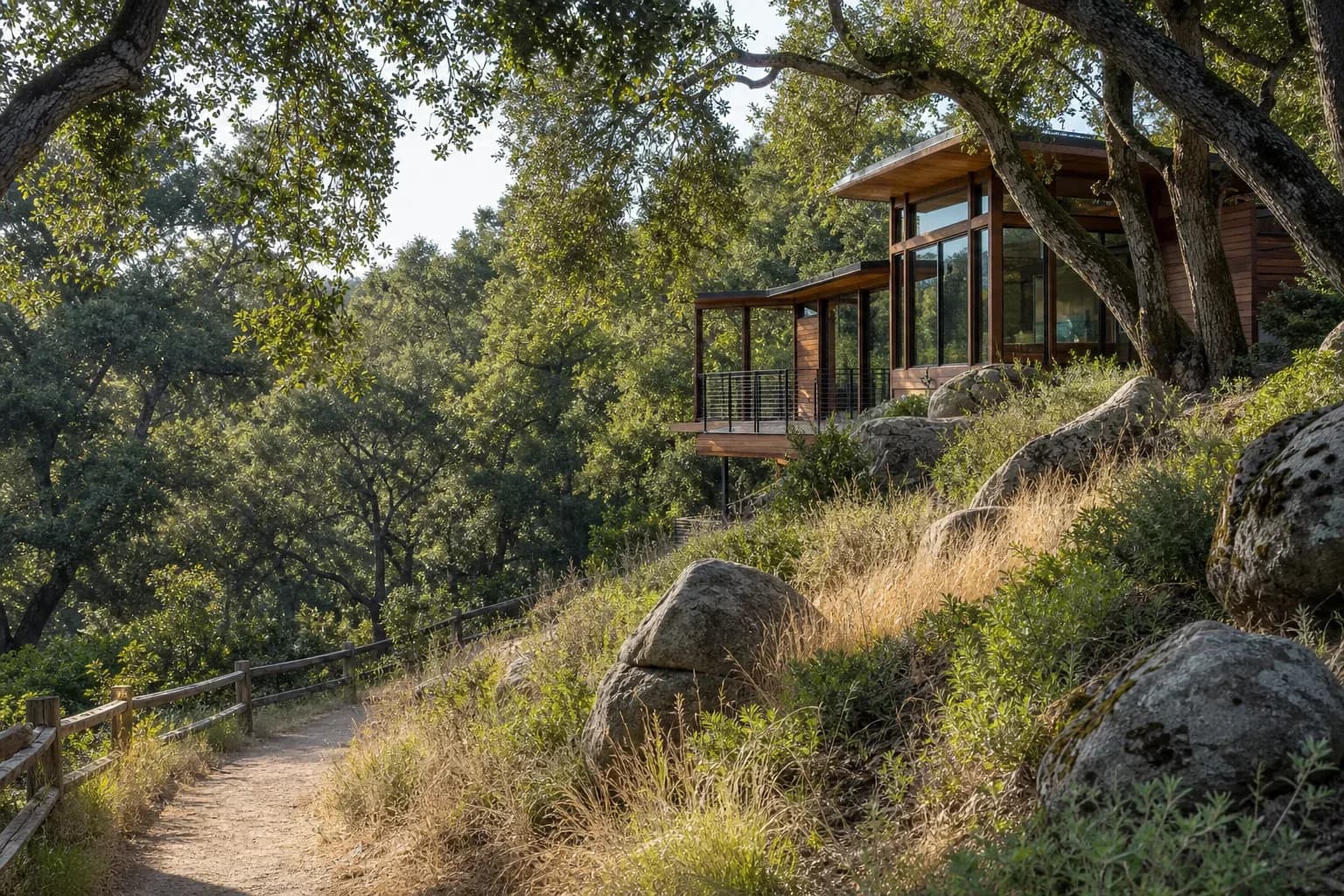
Portola Valley luxury home prices reflect a market defined by extreme scarcity and protected natural beauty. With only 25 to 40 homes selling each year and nearly 1,900 acres of permanent open space. Every estate sale carries outsized weight in this exclusive corner of San Mateo County.
The median sale price in Portola Valley sits near $4.6 million as of mid-2026. Price per square foot has risen 4.6% year over year to $1,680. In the $8 million-plus luxury tier, the median sale price reached $8.5 million in 2025, and 49% of those sales closed above the asking price. Only 17 homes are typically active on the market at any given time, giving sellers meaningful leverage. Understanding how zoning rules, lot sizes, and neighborhood premiums drive these numbers is essential for anyone preparing to sell a Portola Valley estate.
Get your complimentary home valuation , a data-driven estimate that accounts for Portola Valley zoning and neighborhood premiums.
This report breaks down the key market data, zoning dynamics, neighborhood distinctions, and seller strategies that define Portola Valley luxury home prices today.
Current Portola Valley Luxury Home Prices and Value Trends
Portola Valley luxury home prices are shaped by extremely low transaction volume. With only 25 to 40 sales per year, each closing can shift the median. In May 2026, the median sale price held near $4.6 million, roughly flat year over year. The more telling metric is price per square foot, which rose to $1,680, a 4.6% increase. This signals that buyer willingness to pay for Portola Valley homes continues to grow even when median prices appear stable.
Median Sale Prices and Year-Over-Year Trends
The headline median stayed flat, but underlying data reveals genuine appreciation. The price per square foot increase to $1,680 reflects sustained demand in a market where supply cannot grow. Real estate professionals track this metric closely in low-volume markets because it smooths out the distortions created by a handful of sales. To see how recent transactions affect current inventory, browse Portola Valley luxury listings. Central Portola Valley experienced the strongest gains. Median prices there reached $6.3 million, a nearly 50% increase year over year. Buyers are paying a premium for proximity to Alpine Road and Portola Road, which offer fast commutes to Silicon Valley tech campuses. If you are evaluating the area, our guide to buying property in Portola Valley covers the local dynamics that create these neighborhood-level differences.
The Luxury Tier and High-End Estate Performance
The top of the market tells a distinct story. For homes priced at $8 million and above, the median sale price rose to $8.5 million in 2025, a 4% increase year over year. Cash transactions dominate this tier at 55% of all sales. The highest recorded transaction in recent years reached $56 million, demonstrating that trophy-estate demand remains strong at any price level. Monthly median figures can swing dramatically based on which properties close. Last month the reported median was $7.3 million, but that figure reflects the mix of homes sold rather than a sudden market shift. Since Portola Valley mandates minimum lot sizes of one to five acres and prohibits commercial development, every estate carries unique value that broad county data cannot capture.
The Impact of Low Sales Volume on Price Trends
In a market with so few transactions, median prices move quickly based on which homes close in a given period. The steady rise in price per square foot provides a more reliable demand signal. Sellers who focus on this metric when setting their list price avoid the trap of relying on skewed median data. The scarcity of large parcels keeps values elevated. Well-priced homes in Portola Valley typically sell in under five weeks. Estates priced too high can sit on the market for 56 days or more, often closing below what a fair starting price would have commanded. Precise pricing is the single most important lever for a fast, profitable sale.
- Median sale price: $4.6 million (flat year over year)
- Price per square foot: $1,680 (up 4.6%)
- Active inventory: ~17 homes at any given time
- Months of supply: 3.8 (seller’s market)
- Cash sales in $8M+ tier: 55%
- Sales closing above asking ($8M+): 49%
How Do Zoning and Open Space Policies Affect Property Values?
Portola Valley’s zoning code is the single strongest driver of high property values. Since incorporation in 1964, the town has mandated minimum lot sizes of one to five acres, prohibited commercial development, and preserved roughly 1,900 acres of permanent open space. These policies fix the housing supply at a level far below demand, creating a natural price floor that benefits every property owner.
Scarcity Through Lot Size Rules
The town enforces zoning designations including R-1 and Residential Estate (R-E), both of which require single-family homes on large parcels. Builders cannot subdivide these lots, so the total number of homes in Portola Valley is permanently capped. With only 4,500 residents and no land available for new subdivisions, every existing estate gains value from scarcity. This regulatory framework explains why Portola Valley luxury home prices remain elevated even when broader Bay Area markets cool. The Town of Portola Valley General Plan codifies these protections, ensuring that scenic corridors and rural character are preserved for decades. You can learn more about how these rules affect home searches in our Portola Valley real estate guide.
Value From Protected Open Space
The town maintains about 1,900 acres of dedicated open space within its boundaries. This land can never be developed. For homeowners, this means the views, trails, and natural buffers they enjoy today will remain intact permanently. This assurance adds measurable value to every adjacent estate. Open space preservation is not an afterthought in Portola Valley; it is central to the town’s identity. The General Plan prioritizes scenic roads, wildlife corridors, and rural aesthetics. As surrounding communities densify, Portola Valley becomes more valuable by contrast. This long-term stability makes real estate here a reliable store of wealth.
Top Luxury Neighborhoods in Portola Valley: Where the Estates Are
Portola Valley’s luxury market is divided into distinct neighborhoods, each with its own price profile and buyer appeal. Westridge and Blue Oaks command the highest premiums with estates starting at $10 million and lots exceeding five acres. Portola Valley Ranch offers gated security with 24-hour staffing. Central Portola Valley attracts buyers who need fast commutes to Silicon Valley. Understanding these distinctions is critical for accurate pricing.
Westridge and Blue Oaks: Privacy and Large Estates
Westridge sits on rolling hills with sweeping valley views. Estates here are set well back from the road, creating a level of seclusion that is rare anywhere on the Peninsula. Blue Oaks features newer construction with contemporary architecture and premium finishes. Both neighborhoods benefit from the town’s strict lot-size minimums, ensuring that the surrounding landscape remains open and undisturbed. Buyers in these areas prioritize privacy above all else, and many also weigh Woodside against Portola Valley before committing. Many properties include horse trails, guest houses, and formal gardens. Price points typically start at $10 million and can exceed $50 million for trophy estates.
Portola Valley Ranch: Secure Gated Living
Portola Valley Ranch offers a different value proposition. This gated community provides 24-hour security and shared amenities including hiking trails and common open spaces. Homeowners enjoy the natural beauty of the region without the maintenance burden of a sprawling estate. Lot sizes range from one to three acres, and prices typically fall between $4 million and $8 million. This neighborhood appeals to buyers who value community connectivity alongside privacy. The home owners’ association maintains the shared spaces, trails, and security infrastructure, creating a turnkey luxury experience.
Central Portola Valley: Easy Commutes and Access
Central Portola Valley hugs Alpine Road and Portola Road, offering the fastest commutes to Palo Alto, Menlo Park, and major tech campuses. Lots here are smaller, typically one to two acres, but still provide ample room for luxury homes. This zone has seen the strongest price appreciation, with median values reaching $6.3 million. This area attracts professionals who need quick access to Highway 280 and the broader Silicon Valley job market. It also offers proximity to top private schools in nearby Palo Alto and Menlo Park.
| Neighborhood | Typical Lot Size | Primary Appeal | Luxury Price Range |
|---|---|---|---|
| Westridge | 2.5 to 5+ Acres | Maximum Privacy | $10M to $56M |
| Blue Oaks | 1 to 3 Acres | Estate Parcels | $8M to $15M |
| Portola Valley Ranch | 1 to 2 Acres | Gated Security | $4M to $8M |
| Central Portola Valley | 1 to 2 Acres | Fast Commutes | $5M to $10M |
What Pricing Strategies Work for Portola Valley Sellers?
Pricing a Portola Valley home requires neighborhood-specific analysis rather than county-level comparisons. Using broad San Mateo County comps can produce a $1 million to $3 million error in list price. The sale-to-list ratio averages 97%, but in the $8 million-plus tier, 49% of sales close above asking. The most effective strategy is precise, data-driven positioning that accounts for lot size, view corridor, and neighborhood premium.
Avoiding the County Comp Trap
Many sellers look at median prices across San Mateo County and apply those figures to their Portola Valley property. This is a predictable mistake. County-level data aggregates communities with vastly different zoning, density, and buyer profiles. A Portola Valley estate on a three-acre lot with open-space views cannot be compared to a home in a denser Peninsula suburb. When a home is priced correctly from the start, it typically sells in under five weeks. Overpriced estates linger on the market and often close below what a fair initial price would have yielded. The cost of pricing too high is not just time; it is final sale value.
Leveraging the Sale-to-List Ratio
The current sale-to-list ratio in Portola Valley is approximately 97%. This means buyers negotiate roughly 3% off the asking price on average. Sellers should expect some negotiation and price accordingly. However, this average masks significant variation by price tier. In the $8 million and above range, 49% of 2025 sales closed above the asking price. Premium estates in Westridge and Blue Oaks routinely attract multiple offers. For these properties, aggressive pricing that leaves room for negotiation is less effective than pricing at or slightly below market to create competition. Our seller pricing strategy guide walks through these tier-specific approaches.
Market Inventory and Seller Leverage
Inventory in Portola Valley remains chronically low. With approximately 17 active listings and four sales per month, the town operates at a 3.8-month supply. Real estate professionals consider anything below six months a seller’s market. This gives Portola Valley homeowners meaningful leverage in negotiations. Still, accuracy matters more than market conditions. A valuation that accounts for local zoning, lot characteristics, and neighborhood trends sets the foundation for a successful sale, and the monthly market report helps you track conditions between listings. When the price reflects the property’s true position in the market, the path to closing becomes predictable.
- Research neighborhood-specific comps, not county-wide medians
- Price within 3% of fair market value to avoid extended days on market
- Consider pricing slightly below market for $8M+ estates to drive competition
- Factor in lot size, view quality, and open-space adjacency
- Work with a professional who understands Portola Valley’s unique market dynamics
When Is the Best Time to List Your Portola Valley Estate?
Timing matters in Portola Valley, but less than it does in most markets. Because only 25 to 40 homes sell each year, each listing gets concentrated attention regardless of season. Spring and summer see the highest activity, but a well-priced estate can sell quickly in any month. The bigger factor is buyer access to cash: 55% of $8 million-plus sales are all-cash, insulating the market from interest rate fluctuations.
Cash Deals and Market Speed
High interest rates slow most real estate markets, but Portola Valley’s luxury tier operates differently. With 55% of buyers paying all cash, financing contingencies rarely derail transactions. This cash-heavy buyer pool means your sale is less likely to fall through due to loan issues, and closings tend to be faster and more certain. Well-priced homes move with a median time on market of 33 days. Overpriced estates average 56 days or more. The price-setting decision is the primary determinant of speed. A disciplined pricing framework matters more than the calendar in a market this thin.
Supply and Off-Market Transactions
Portola Valley operates at 3.8 months of supply, firmly in seller’s territory. This low inventory means motivated buyers have few alternatives when a well-priced home appears. However, 20% to 30% of $8 million-plus sales occur off-market through private networks. Access to these off-market buyers is a significant advantage when selling a luxury estate. Spring and early summer remain the most active listing periods, but the low-volume nature of Portola Valley means a properly positioned estate attracts attention year-round. Partnering with a Realtor who has deep local relationships and access to private buyer networks expands your pool of potential buyers beyond those browsing public listings.
Why Work With Robert Parish for Your Portola Valley Home Sale
Selling a Portola Valley estate requires more than market data. It demands knowledge of local zoning rules, buyer networks, and the nuances of a low-volume luxury market. Robert Parish brings 25-plus years of Peninsula real estate experience plus an active California attorney license, giving sellers both market intelligence and contract-level precision.
Experience and Expertise That Matter
Robert Parish has represented buyers and sellers across the Peninsula for more than 25 years. He also holds a California attorney license, which supports complex sale structures, trust transactions, and legal negotiations that most agents cannot handle. This dual expertise is rare among luxury agents in San Mateo County. His practice focuses on homes priced from $3 million to $25 million. Directly aligning with the Portola Valley market where median prices sit near $4.6 million and top estates exceed $15 million. Through Compass, he offers access to programs such as Compass Concierge for eligible pre-sale work, subject to approval and program terms.
Local Knowledge of Portola Valley and the Peninsula
Portola Valley has its own zoning code, its own buyer pool, and its own market rhythm. County-level comps can produce a $1 million to $3 million error when applied to a Portola Valley estate. An agent who understands the Westridge premium, the privacy value of Portola Valley Ranch, and the commute advantage of Central Portola Valley can price with genuine precision. Robert Parish has worked across the Peninsula for three decades. He knows the communities that feed into Portola Valley: Atherton, Palo Alto, Menlo Park, Los Altos Hills. His network includes buyers looking for exactly the kind of privacy and acreage that Portola Valley offers. Many luxury sales happen off-market, and access to that private network makes a meaningful difference.
A Results-Oriented Approach
Every seller wants to maximize equity. The right pricing strategy, the right timing, and the right presentation all determine the final sale price. Robert Parish combines attorney-level precision with market intelligence to guide sellers through every step. From the first conversation through the final close, the goal is to help clients create equity with every transaction. Start that conversation here.
Frequently Asked Questions About Portola Valley Luxury Home Prices
What is the average price of a home in Portola Valley?
The median sale price in Portola Valley is approximately $4.6 million as of mid-2026. Price per square foot averages around $1,680. In the luxury tier of homes at $8 million and above, the median sale price was $8.5 million in 2025, up about 4% from the prior year.
Why are Portola Valley home values so high?
Several factors drive premium pricing. Extremely limited inventory (only 25 to 40 homes sell each year), minimum lot sizes of one to five acres. Roughly 1,900 acres of permanent open space, and proximity to Silicon Valley all contribute. The town’s zoning rules prevent commercial development and high-density housing, which keeps supply low and values high.
What is the most expensive neighborhood in Portola Valley?
Westridge and Blue Oaks are the premier luxury neighborhoods. Estates in these areas frequently command prices above $10 million. The highest closed transaction in recent years reached $56 million for a trophy estate. Portola Valley Ranch is another sought-after community with gated access and 24-hour security.
How fast do homes sell in Portola Valley?
Well-priced homes typically sell within 33 to 56 days. Overpriced estates can sit much longer. The sale-to-list ratio is about 97%, meaning buyers negotiate roughly 3% off the asking price on average. However, 49% of sales above $8 million closed above the asking price in 2025.
What is the minimum lot size in Portola Valley?
Minimum lot sizes range from one to five acres depending on the zoning district. The town has no commercial development and requires single-family zoning throughout. This large-lot requirement preserves the rural character that makes Portola Valley one of the most exclusive communities on the Peninsula.